

If you’ve ever mounted a moving head on top of a truss tower or lighting podium, you’ve probably experienced the same thing.
Everything looks great until you power the fixture up.
Suddenly the head reaches its tilt limit far sooner than expected, pan movement becomes restricted, and the fixture can’t deliver the coverage it was designed for.
It’s not a fault with the moving head. It’s simply the result of where it’s mounted.
A Better Way
Rather than placing the fixture on top of the truss, the Global Truss HangMan Plate suspends the moving head beneath the truss where it was designed to operate.
The result is greater movement clearance while maintaining a clean, professional installation.
The fixture can perform its intended pan and tilt movement without the truss getting in the way.
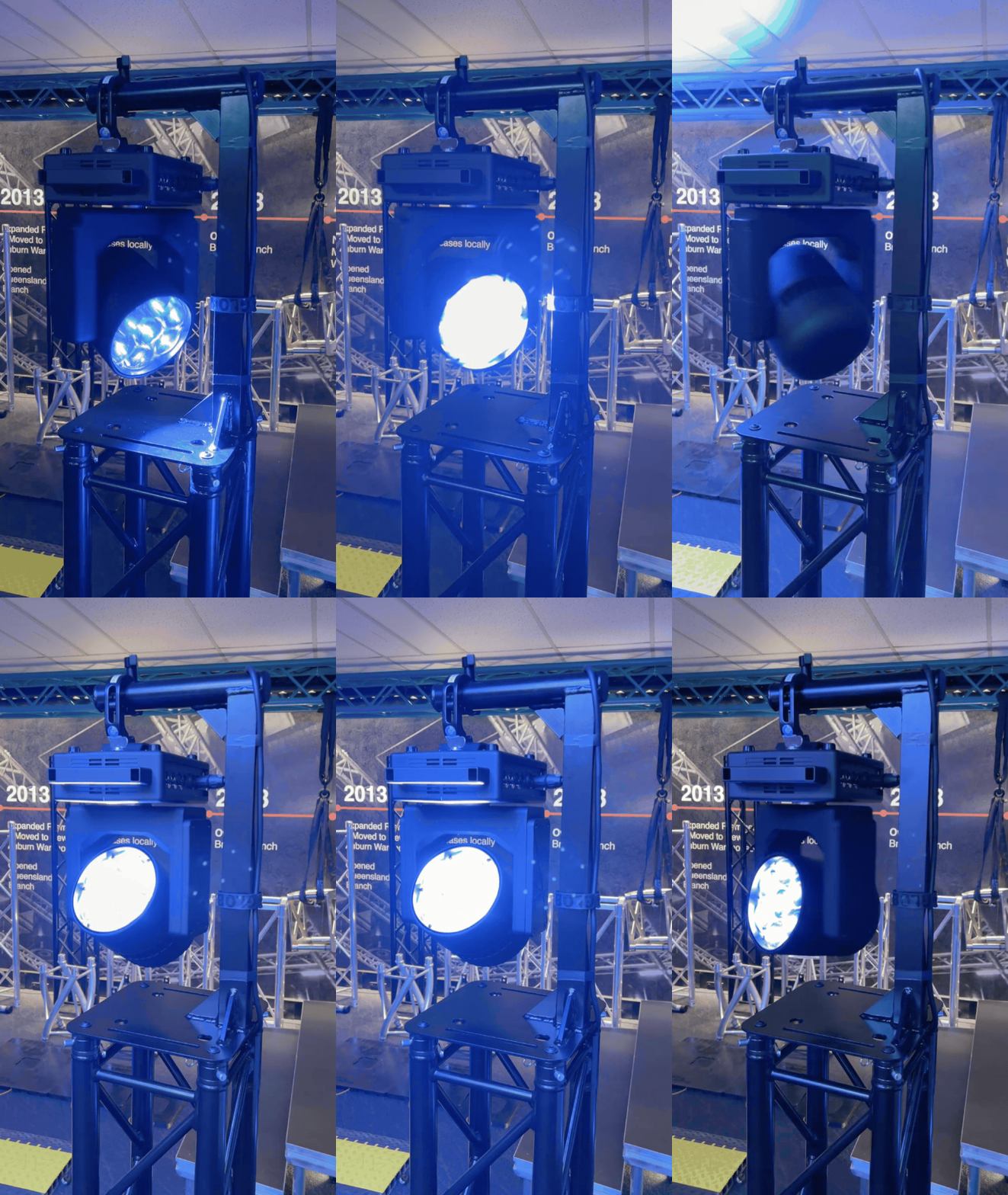
Watching the fixture move tells the story better than any specification sheet.
In this demonstration you can see:
- Traditional top-mounted positioning
- The same fixture mounted using the HangMan Plate
- The difference in pan and tilt clearance
- The cleaner presentation beneath the truss
Sometimes seeing the movement is all it takes.
Fixed Plate. Full Motion.
The HangMan Plate doesn’t reinvent truss mounting.
It simply solves a problem that many production professionals have worked around for years.
If you’re building truss towers, lighting podiums or exhibition structures using moving head fixtures, mounting beneath the truss can make a noticeable difference to fixture movement while maintaining a clean, professional installation.
Sometimes the best solution is also the simplest.
The Common Setup
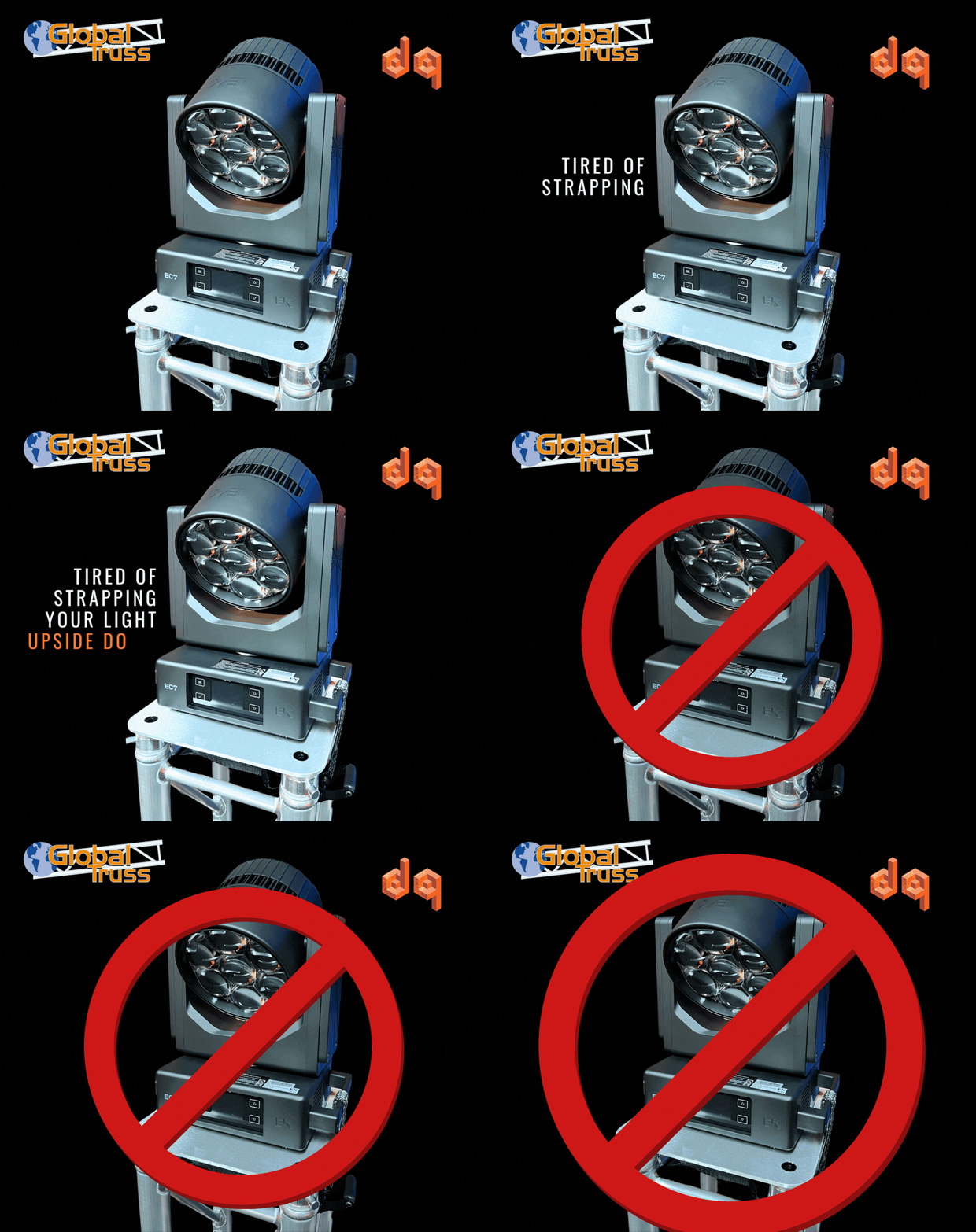
Mounting a moving head directly on top of a truss tower is common practice because it’s quick, familiar and uses the hardware already on hand.
The downside is that the fixture now sits above the truss instead of below it.
Depending on the fixture and programming, the head can quickly run out of clearance during pan and tilt movement.
For many productions it’s a compromise that’s simply accepted.
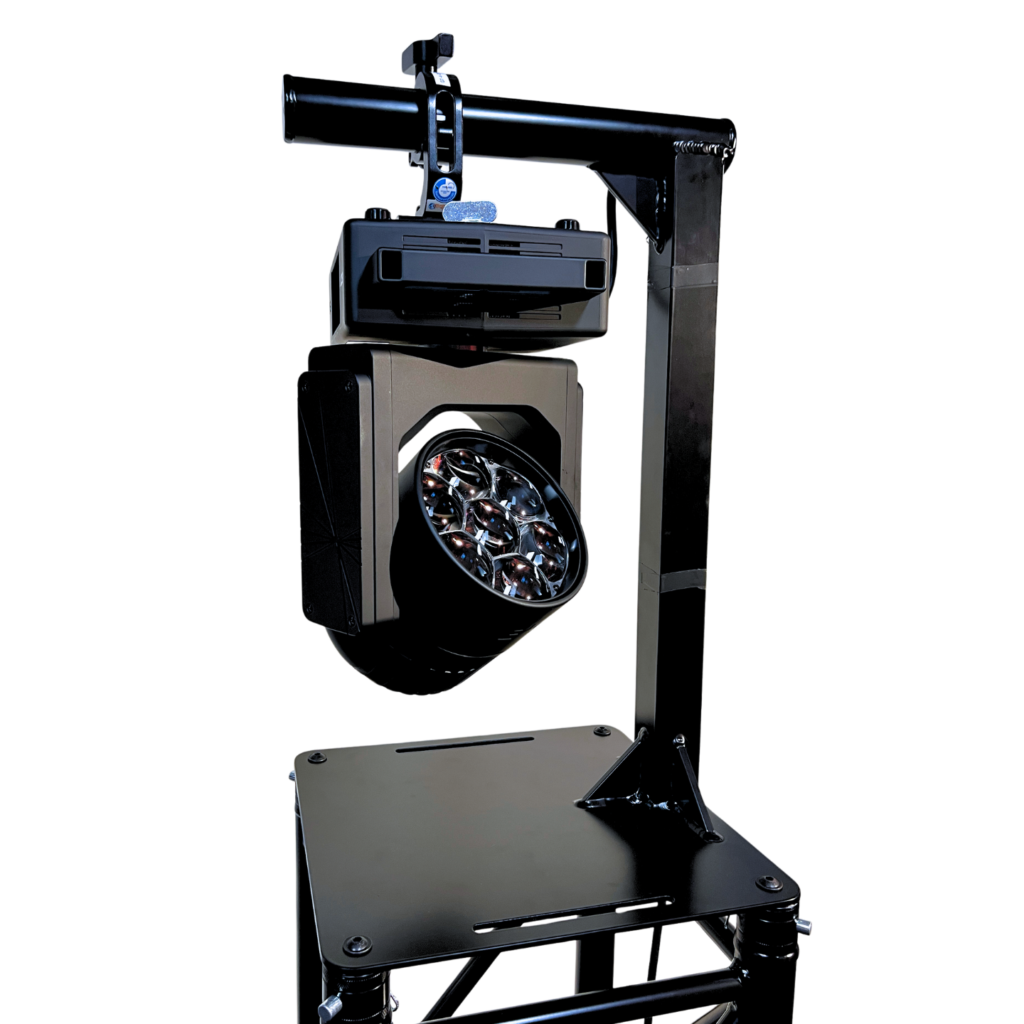
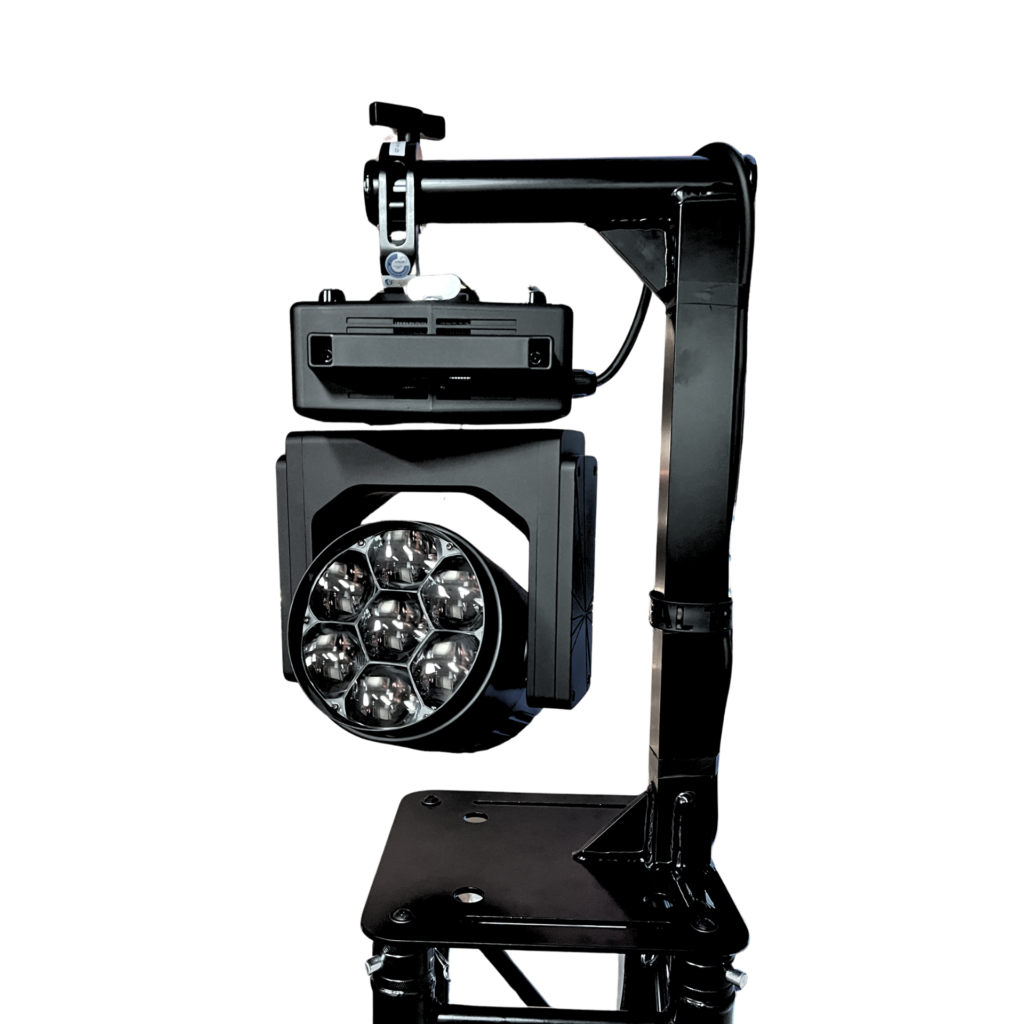
F34 Lighting HangMan Plate, with Spigots, Pins & R-Clips – Black
- Allows moving head fixtures to achieve their intended pan and tilt movement by mounting them beneath F34 truss.
- Designed specifically for Global Truss F34 aluminium truss towers, truss totems and lighting podiums.
- Works with the fixture’s existing mounting hardware and industry-standard lighting clamps.
- Precision welded construction with a professional black powder-coated finish that complements modern black truss systems.
- Ideal for event production, equipment hire, theatres, houses of worship, exhibitions and AV installations.
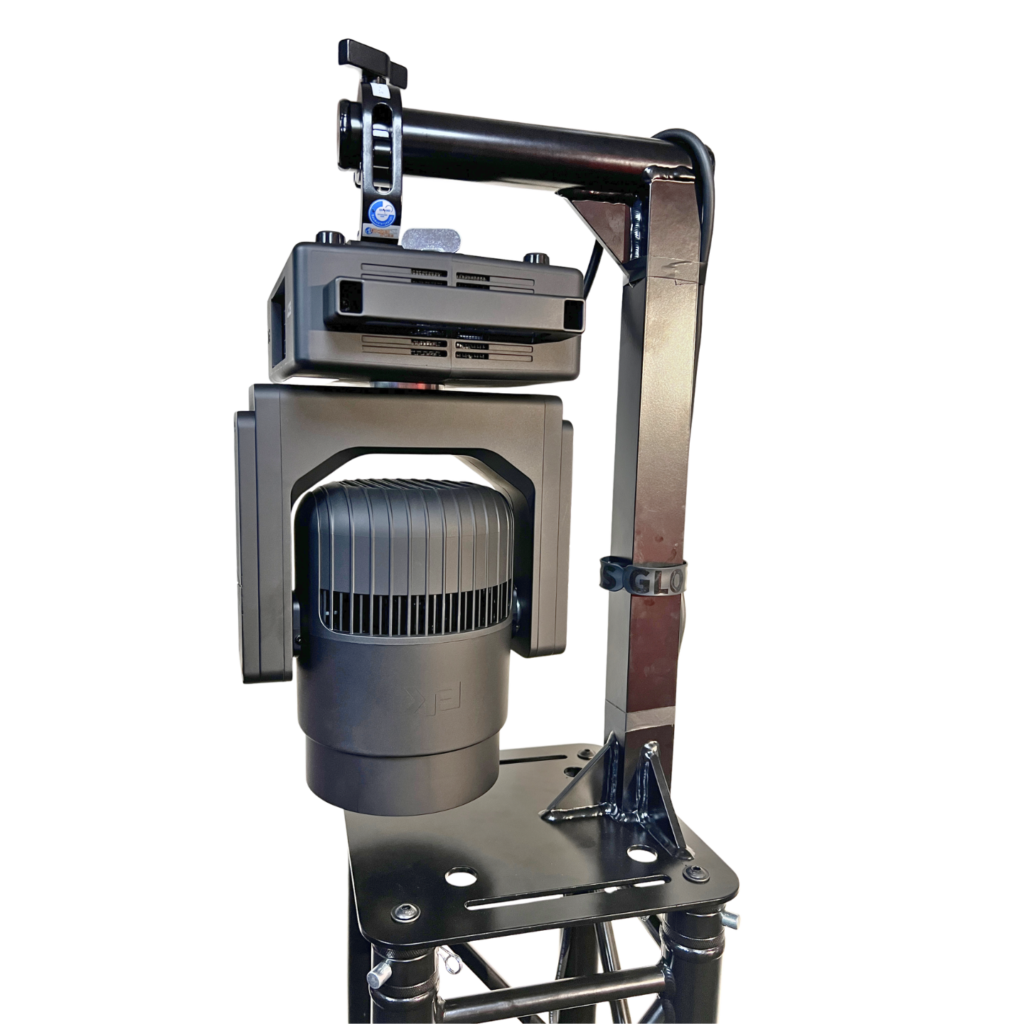
F44 Lighting HangMan Plate, with Spigots, Pins & R-Clips – Black
- Allows moving head fixtures to achieve their intended pan and tilt movement by mounting them beneath Global Truss F44 aluminium truss.
- Designed specifically for Global Truss F44 truss towers, truss totems and lighting podiums.
- Works with the fixture’s existing mounting hardware and industry-standard lighting clamps.
- Professional black powder-coated finish complements modern black truss systems.
- Includes spigots, pins and R-clips for quick installation.